
Complete Blood Count
Red blood cells, white blood cells and platelets in one test — a broad look at your blood.
Add to your order
No referral needed
Added to your order
Click the button to view your cart
Included Markers
1 markersComplete Blood Count (CBC)
A complete blood count (CBC) that measures red blood cells, white blood cells, and platelets. This widely used test provides a general overview of your blood health in a single measurement.
Why this test?
Your blood contains different types of cells, each with a specific role: red blood cells carry oxygen, white blood cells support the immune system, and platelets help with clotting. A CBC measures all of these, giving a broad picture of how these cell populations look at the time of the test.
Who is this test for?
This test may be relevant for anyone who wants a general overview of their blood cell counts. It can be useful as a baseline measurement, as part of a general health check, or for those who are experiencing symptoms like persistent tiredness and want to see whether their blood values may offer any clues.
What is tested?
- Red Blood Cells (RBC): the cells responsible for carrying oxygen throughout the body.
- Haemoglobin: the protein inside red blood cells that binds and carries oxygen.
- Haematocrit: the proportion of blood that is made up of red blood cells.
- White Blood Cells (WBC): cells that play a role in the immune response.
- Platelets: small cell fragments that help blood to clot when needed.
- Indices (MCV, MCH, MCHC): calculated values that describe the size and haemoglobin content of your red blood cells.
What can this test tell you?
The results may show whether your blood cell counts and related values fall within expected ranges. Low haemoglobin, for example, could be associated with iron deficiency or other nutritional factors. Changes in white blood cell counts may reflect how the immune system is responding. These are general indicators, and a healthcare provider can help put them in context.
How is the sample collected?
A blood sample is drawn at a certified sample point (afnamepunt). There are 700+ locations across the Netherlands. After placing your order, you can select a location and time that suits you.
When is this test useful?
A CBC may be useful as a general health check, when you want a baseline for your blood values, or when symptoms such as ongoing fatigue, frequent infections, or unusual bruising prompt a closer look.
What do the results mean?
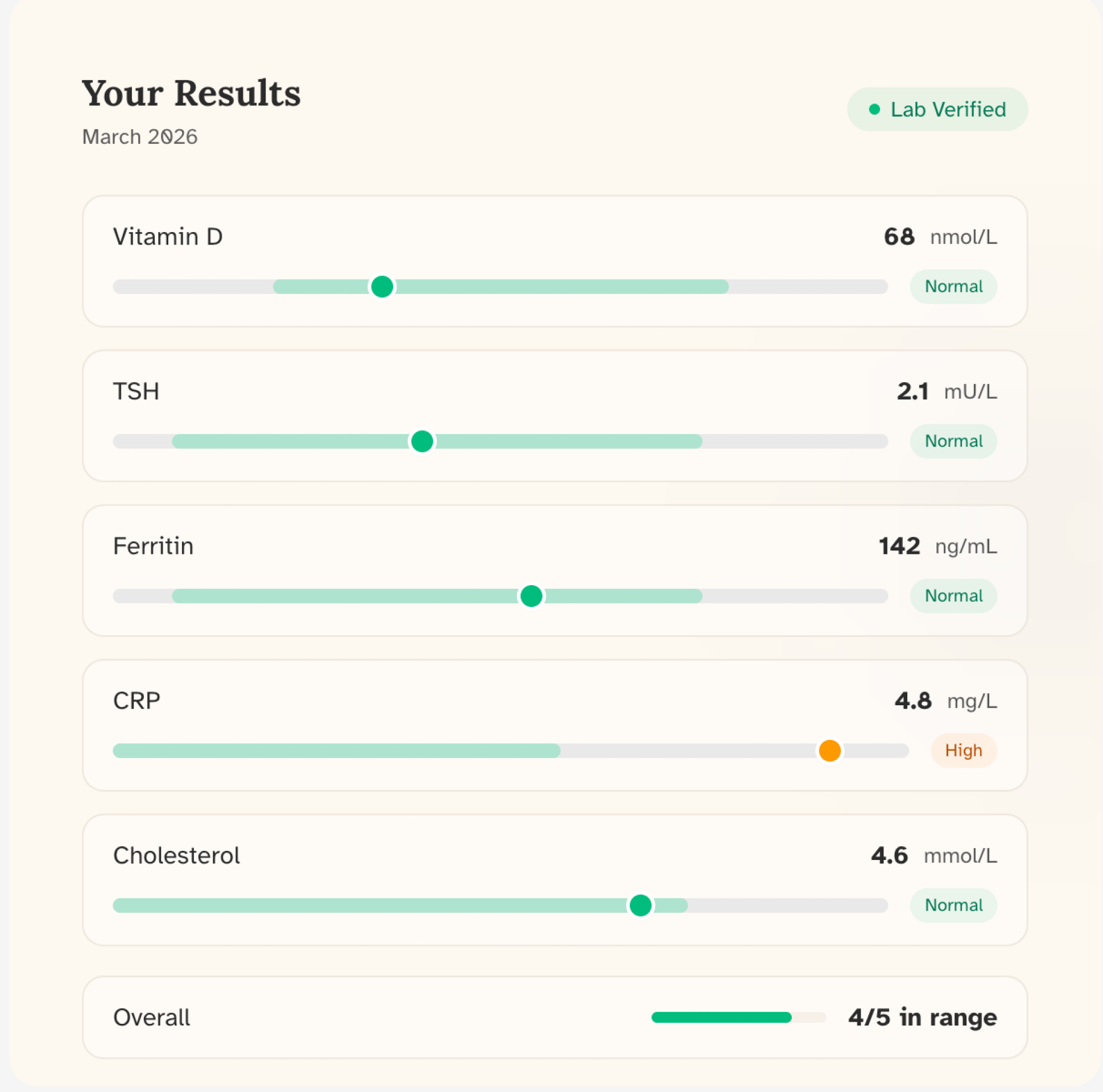
Results are shown with reference ranges for each value. It is not unusual for a value to be slightly outside the range without indicating a problem. Factors such as hydration, recent activity, and time of day can influence some results. A healthcare provider can help you understand what your specific values may mean.
What happens after the results?
Your results are available in your personal dashboard. If any values fall outside the reference range, or if you would like to discuss what the results mean for your health, sharing them with your healthcare provider is recommended.
Frequently Asked Questions
Fasting is generally not required for a CBC. However, if you are combining this with other tests that require fasting, your healthcare provider may advise fasting.
What We Test
| No. | Biomarker | Unit | Turnaround |
|---|---|---|---|
| 01 | Complete Blood Count (CBC) | — | 5 days |
| Your result arrives once the slowest test is finished: 5 days. This is indicative; turnaround varies per laboratory. | |||
Preparation
Nothing special is needed for these tests.
- Water is always fine. Drink as usual beforehand, it makes the draw easier.
- Take your usual medication, unless your own doctor told you otherwise.
Extend this panel
Same draw, no second appointment.
Related Measurements
Vitamin and Iron Panel
Iron status (ferritin, iron, transferrin) and vitamin D — eating a lot less also means taking in fewer nutrients.
Blood Test Iron, Vitamins
Complete blood count, iron status, vitamin B12 and vitamin D in one panel — eating a lot less also means fewer nutrients coming in.
Insulin Resistance (HOMA-IR)
Insulin resistance becomes more relevant with age. Track it with fasting glucose, insulin and your HOMA-IR score.