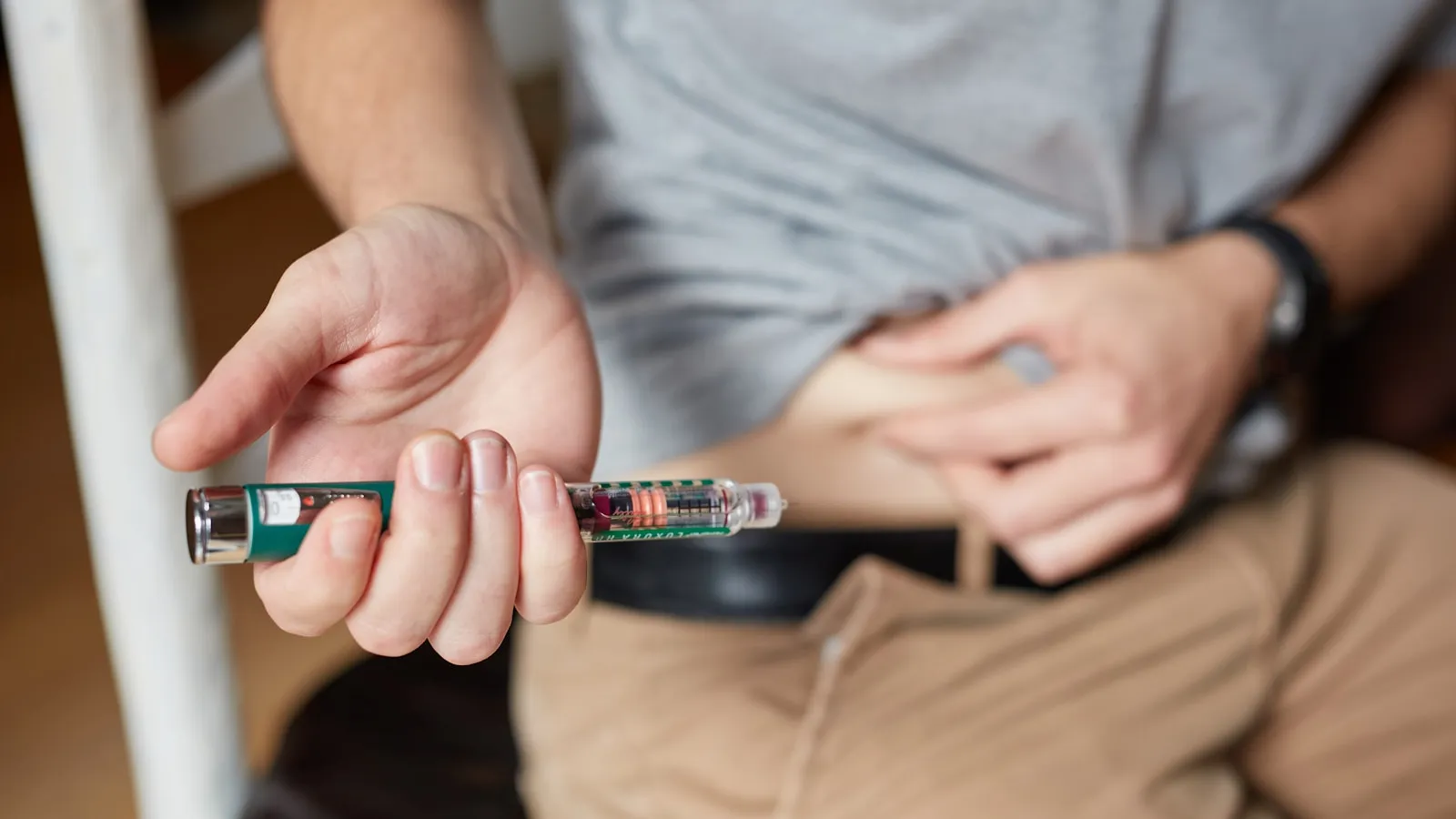
The best known Ozempic side effects are gastrointestinal: nausea, constipation and diarrhoea. Less well known is that some of them are barely noticeable. Those are visible in your blood. In the STEP 1 trial, participants lost an average of 14.9% of their body weight over 68 weeks.
That is a lot of weight in a short time. Your pancreas, your kidneys and your nutrient stores all register it (Wilding et al., 2021).
What strikes me about most Dutch overviews is that they stop at the symptom. You read that nausea is common, and that is where it ends. Below are nine side effects, each paired with the blood value that can say something about it.
Ozempic is the brand name of semaglutide, a GLP-1 medicine. Wegovy contains the same substance. Mounjaro contains tirzepatide and acts on two hormone pathways at once. The side effects below largely apply to this whole group.
Overview: which symptom maps to which blood value?
Not every side effect can be read from blood. No single value makes a diagnosis on its own. What a value can do is add context to a symptom you already feel. Here is how the two line up.
| Symptom | What may be going on | Related value |
|---|---|---|
| Nausea, vomiting | Slower gastric emptying | No direct value |
| Persistent vomiting or diarrhoea | Fluid loss | Sodium, potassium, creatinine |
| Severe abdominal pain radiating to the back | Pancreas | Lipase, amylase |
| Pain in the upper right abdomen | Gallbladder | Bilirubin, gamma-GT, ALT |
| Strength declining | Loss of muscle mass | Albumin, creatinine |
| Fatigue, breathlessness | Lower food intake | Ferritin, vitamin B12, folate |
| Shaking, sweating, confusion | Low blood sugar | Glucose, HbA1c |
1. Nausea and vomiting
Nausea is the most reported side effect of semaglutide. The medicine slows gastric emptying. Your stomach stays full for longer. For many people the symptom peaks in the first weeks and just after each dose increase.
The Dutch Farmacotherapeutisch Kompas lists gastrointestinal symptoms with semaglutide as very common. That means more than 1 in 10 users.
Blood says little here. The nausea itself is a sensation, not a value. What does become measurable is the consequence if you vomit for days on end. That is point 3.
Food plays a part here: read what not to eat on Ozempic.
2. Constipation and diarrhoea
Constipation and diarrhoea both belong to the gastrointestinal package of GLP-1 medication. They can even alternate. The slower gut explains the constipation. Smaller portions and altered digestion may explain the diarrhoea.
In a US study, the risk of bowel obstruction and gastroparesis was higher among GLP-1 users than among users of another weight loss drug (Sodhi et al., 2023). Those are rare outcomes. They are not everyday constipation.
A single day of constipation is unpleasant. A belly that swells and does not empty is something else. That one belongs with your GP.
3. Dehydration and shifts in your salts
Vomiting for a few days, or diarrhoea, costs you fluid and salt. Sodium and potassium can then shift. Your kidneys receive less blood to process. Creatinine may rise and eGFR may fall.
Picture this: you are 8 weeks into a 1 mg dose and eating 40% less than before. You drink less too, because you have no appetite. Then it is not the weight loss causing trouble, it is the fluid.
This is the side effect you feel least. Values that speak to it are sodium, potassium, creatinine and eGFR. A low potassium value can go together with muscle weakness and palpitations.
4. Inflammation of the pancreas
Pancreatitis is rare. It is also the side effect doctors watch most closely. The classic picture is severe, persistent pain high in the abdomen. It radiates to the back, often with vomiting.
The pain does not ease the way ordinary nausea does. That difference matters. Two enzymes are the usual values here: lipase and amylase.
Lipase stays raised longer than amylase. That makes lipase useful if you only have blood drawn a few days later. With this pain pattern, call your GP the same day. Do not wait for a test result.
5. Gallstones and gallbladder problems
Rapid weight loss raises the chance of gallstones. GLP-1 medication adds to that. A meta-analysis of 76 randomised trials covering 103,371 participants found an increased risk of gallbladder and biliary disease.
For weight loss use, that risk was more than twice that of placebo. The relative risk was 2.29 in the weight loss group, against 1.27 in the diabetes group (He et al., 2022). Higher doses and longer use carried higher risk.
Symptoms usually sit in the upper right abdomen. Sometimes they radiate to the right shoulder. Often they follow a fatty meal.
Yellow eyes or yellow skin warrant urgent assessment. Bilirubin, gamma-GT and ALT are the values involved. What raised liver values can mean more broadly is covered in our article on elevated liver values.
Already had your gallbladder removed? Read what changes when living without a gallbladder.
6. Loss of muscle mass
This is where most nonsense gets written. Yes, rapid weight loss costs you muscle mass. Not only fat. But the picture is more nuanced than the headline "GLP-1 destroys your muscle" suggests.
In the SEMALEAN study, fat free mass fell by 3.0 kg at 7 months. It then stayed stable through month 12. Over the same period handgrip strength rose by 4.1 kg. The share of participants with sarcopenic obesity fell from 49% to 33% (Alissou et al., 2026).
So in absolute terms muscle mass does come off. As a proportion of your body it goes up. And measured strength improved in that study. That is a different thing from muscle wasting.
I think this distinction matters. People who are frightened about muscle loss sometimes stop a medicine that was working well. The honest message is that pace and protein intake matter, not that the drug breaks down muscle.
The same rapid loss sits behind what people call "Ozempic face". Fat leaves the face, so the skin looks looser. It is not a separate drug effect, but a consequence of the pace.
Blood does not measure muscle mass directly. Albumin says something about your protein status. Creatinine partly tracks muscle volume. The Dutch Voedingscentrum uses roughly 0.8 grams of protein per kilo of body weight per day as a starting point for adults.
How to catch it in time is in losing muscle while losing weight: 8 signs.
7. Vitamin and mineral shortfalls
You eat considerably less. So you also take in less of everything that was in that food. This is the slowest side effect on the list. A shortfall builds over months.
At first it produces vague symptoms: fatigue, breathlessness on exertion, or tingling. That vagueness is what makes it tricky. You put it down to the weight loss itself.
The values most often involved are ferritin, vitamin B12 and folate. Ferritin says something about your iron stores. Those run down before your haemoglobin falls.
What a low ferritin value means is covered in our article on low ferritin.
8. Fatigue and hair loss
Fatigue during a GLP-1 course rarely has one cause. Fewer calories, less protein, and sometimes a shortfall building up. A thyroid that was already running slow can play a part too.
Hair loss often arrives some months after the fastest weight loss. Not during it. That delay confuses people. You lose weight quickly in March, your hair thins in June, and the link is no longer obvious.
For most people this type of hair loss is temporary. Values that can add context are ferritin, vitamin B12, folate and TSH. A single value rarely explains the fatigue on its own.
9. Low blood sugar when combined with other medication
Semaglutide on its own carries little risk of low blood sugar. That risk rises when it is combined with insulin. Sulfonylureas such as gliclazide raise it too. Symptoms are shaking, sweating, palpitations, hunger and confusion.
Do you use diabetes medication alongside a GLP-1 medicine? Discuss that with your GP or internist. They can judge whether your other medication needs adjusting.
The values involved are fasting glucose and HbA1c. HbA1c reflects roughly the past eight to twelve weeks.
How long do Ozempic side effects last?
For most people the gastrointestinal symptoms peak in the first weeks. After that they settle. Each dose increase can stir them up again. That pattern repeats until you reach your final dose. Symptoms that stay unchanged for months fit this picture less well.
So watch the rhythm, not only the symptom. Does the nausea ease in the days before your next injection? Then it follows the dose. Does it stay constant, or get worse? That is a reason to call.
I find this the most useful thing you can track yourself. A short weekly note is enough: which dose, which symptom, how bad on a scale of 1 to 10. Your GP gets more out of that than out of a single result.
What happens to your weight if you stop?
For many people the weight partly returns after stopping. That is not a failure. It is the known course of this type of treatment. Hunger comes back once the medicine has left your body.
What you keep in that period depends partly on what you held on to while losing. Muscle mass you preserved with strength training and enough protein does not vanish by itself. Fat returns faster than muscle.
In the tirzepatide trial SURMOUNT-1, participants on the highest dose lost an average of 20.9% of their body weight over 72 weeks (Jastreboff et al., 2022). The same applies there: the medicine works while you use it.
Curious what to expect while you stay on it? Work out how much you lose on Ozempic (calculator).
When should you contact your GP?
Most side effects on this list are troublesome and temporary. A few are not. The distinction sits in the pattern. Symptoms that ease between doses belong to the first group. Symptoms that persist or worsen belong to the second.
Make contact the same day for severe abdominal pain radiating to the back. Also for yellow eyes or yellow skin. Also for vomiting that lasts more than a day. And for confusion with heavy sweating.
The Farmacotherapeutisch Kompas also notes that semaglutide is not advised for people with medullary thyroid carcinoma in the family. That is not a side effect, but a reason not to use the medicine. Your prescriber weighs it beforehand.
What can you have measured?
Nothing on this list calls for panic. No value replaces your doctor. Some people choose to take a baseline before starting. A later value then has something to be compared against.
Without a starting value, a result only tells you what it is right now. Whether it rose or fell for you stays open.
The GLP-1 baseline panel covers markers around the pancreas, the liver, the kidneys and your nutritional status. The GLP-1 check-in panel repeats that set, so you can see the trend.
Do you recognise one of the nine patterns above? Note when the symptom started. Note whether it coincided with a dose increase. Take that to your GP. That detail is often more useful than the result itself.
Technique matters too: read how Ozempic is administered and what to measure around it.
References
- Wilding JPH, et al. Once-Weekly Semaglutide in Adults with Overweight or Obesity. N Engl J Med. 2021;384(11):989-1002. PMID 33567185.
- Jastreboff AM, et al. Tirzepatide Once Weekly for the Treatment of Obesity. N Engl J Med. 2022;387(3):205-216. PMID 35658024.
- Sodhi M, et al. Risk of Gastrointestinal Adverse Events Associated With Glucagon-Like Peptide-1 Receptor Agonists for Weight Loss. JAMA. 2023;330(18):1795-1797. PMID 37796527.
- He L, et al. Association of Glucagon-Like Peptide-1 Receptor Agonist Use With Risk of Gallbladder and Biliary Diseases. JAMA Intern Med. 2022;182(5):513-519. PMID 35344001.
- Alissou M, et al. Impact of Semaglutide on fat mass, lean mass and muscle function in patients with obesity: The SEMALEAN study. Diabetes Obes Metab. 2026. PMID 41068996.
- Farmacotherapeutisch Kompas, semaglutide preparation text.
- Voedingscentrum, protein in the daily diet.
Every blood test result includes a professional assessment from a BIG-registered doctor. For treatment decisions, discuss your results with your GP.
Author
SlimmerLab
Dr. Naimi, BIG-registered physician, oversees the medical standards behind our content and assessments. Read our medical policy
Related Tests
Related Posts

Lowering triglycerides: what works and what your blood shows

Calculating HOMA-IR: what the index says about insulin sensitivity