Prediabetes means your fasting glucose is too high for normal but too low for diabetes. In the Netherlands that is a value between 6.1 and 6.9 mmol/l. Below 6.1 counts as normal, and from 7.0 mmol/l measured twice your doctor speaks of diabetes.
So it is an in-between stage, not a disease in itself.
That is also the good news about it. Two large international trials independently found that at this stage a lifestyle programme cut new diabetes cases by 58 percent.
Which values define prediabetes?
Two values shape the picture: your fasting glucose and your HbA1c. The first is a snapshot after a night without food, the second an average over eight to twelve weeks. They can contradict each other, and then the repeated measurement usually decides.
The Dutch cut-offs are below, in mmol/l and mmol/mol.
| Stage | Fasting glucose | What it means |
|---|---|---|
| Normal | Below 6.1 mmol/l | No indication of disturbed sugar handling |
| Impaired fasting glucose | 6.1 to 6.9 mmol/l | The stage called prediabetes |
| Diabetes | 7.0 mmol/l or above | Measured twice on different days |
| HbA1c in diabetes | 48 mmol/mol or above | Average sugar over 8 to 12 weeks |
These limits come from the WHO criteria applied by the Dutch College of General Practitioners in its guideline on type 2 diabetes. Note that many English-language pages quote the American threshold of 5.6 mmol/l, which sits lower than the Dutch one.
Imagine two people with a fasting glucose of 6.0 and 6.2 mmol/l. The first is told the value is normal. The second gets a name attached to it and often a follow-up appointment.
The difference between those two is two tenths.
Biologically almost nothing happens between 6.0 and 6.2 mmol/l, and both people sit on the same slope. The line is an agreement that had to be drawn somewhere, not a switch that flips.
There is a third way to establish this stage, impaired glucose tolerance. You drink a sugar solution and your glucose is measured again two hours later. That test catches people who look normal on a fasting measurement.
What symptoms does prediabetes cause?
None, in most cases. Prediabetes does not hurt and rarely produces recognisable symptoms, which is why this stage usually surfaces by chance during blood work ordered for another reason. Waiting for symptoms here means waiting for the next stage.
The classic diabetes symptoms belong to higher values.
Frequent urination, heavy thirst and unintended weight loss appear when your glucose is substantially raised, not at 6.4 mmol/l. The Dutch Thuisarts service accordingly lists these symptoms under diabetes rather than under the stage before it.
What does more often come with it is the surrounding pattern: a growing waistline, raised blood pressure and abnormal fat values. Those five risk factors together are described in metabolic syndrome.
How many people have it?
More than are registered, because without symptoms and without a test it stays invisible. According to RIVM figures, more than 1.2 million people in the Netherlands had diagnosed diabetes mellitus in 2024. The stage before it is not centrally counted.
That difference in visibility is the real problem.
Diabetes gets registered the moment the diagnosis is made. Prediabetes is only found when blood happens to be drawn and someone looks at the number. A result of 6.5 mmol/l prints on the same sheet as a result of 5.5, with no alarm attached.
Does prediabetes always become diabetes?
No, and that is the most important thing to say about this stage. Some people with impaired fasting glucose return to normal values, some stay stable, and some progress to diabetes. Which way it goes tracks closely with weight and movement.
The figures here are unusually consistent.
In the American Diabetes Prevention Program, 3,234 participants with impaired glucose tolerance received a lifestyle programme, metformin or a placebo. The lifestyle programme cut new diabetes cases by 58 percent, metformin by 31 percent (Knowler et al., 2002).
The Finnish Diabetes Prevention Study independently arrived at exactly the same percentage, over an average of 3.2 years of follow-up (Tuomilehto et al., 2001).
Two trials on two continents, the same number. That makes this one of the best-supported findings in preventive medicine.
What actually worked in those trials?
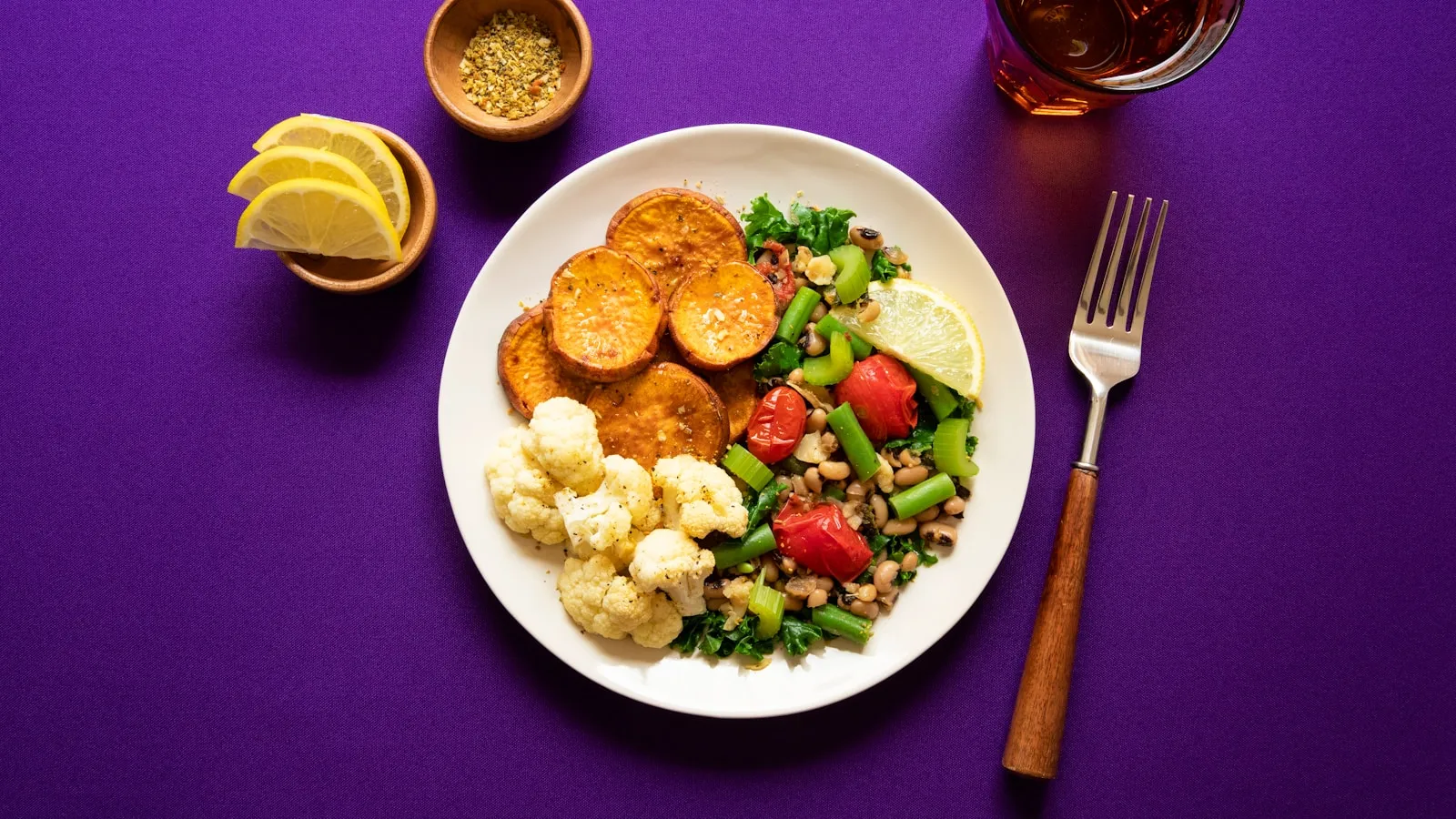
Modest things, kept up consistently. Both programmes aimed at weight loss of around five to seven percent, roughly half an hour of moderate movement a day, less saturated fat and more fibre. No extreme diets and no daily gym.
Five percent of eighty kilos is four kilos.
That is the kind of number that feels reachable, and it is precisely what these trials aimed at. The Dutch Voedingscentrum describes the same principles for the Dutch situation: fibre-rich food, less saturated fat and regular movement.
Muscle counts heavily here, because muscle tissue takes up most of your glucose. That is also why losing weight too fast can work against you, as covered in the crash diet.
Which values should you have measured?
Glucose and HbA1c together, and preferably insulin as well. The first two tell you where you stand now. Insulin tells you how hard your pancreas is working to keep you there, and that value often moves years before your glucose does.
Drawn fasting, or the comparison does not hold.
The GLP-1 baseline panel contains glucose, HbA1c and insulin in one draw, alongside your liver, kidney and fat values. A BIG-registered doctor assesses the result. How to turn glucose and insulin into an index is covered in calculating HOMA-IR.
Always discuss a value between 6.1 and 6.9 mmol/l with your GP. They decide whether repeating is needed and what the value means in your situation.
What I would look at myself
The difference between 5.9 and 6.2 mmol/l. That is three tenths, and it is the difference between a result nobody looks at twice and a result with a name attached. Biologically, almost nothing happens between those two numbers.
What strikes me about prediabetes is how rarely it gets presented as an opportunity.
The 58 percent from those two trials applies to exactly this group. That figure was not repeated later in people who already had a diabetes diagnosis. So the stage holding the most to gain is precisely the stage that gets the least attention.
References
- Knowler WC et al. Reduction in the incidence of type 2 diabetes with lifestyle intervention or metformin. N Engl J Med. 2002. PMID 11832527
- Tuomilehto J et al. Prevention of type 2 diabetes mellitus by changes in lifestyle among subjects with impaired glucose tolerance. N Engl J Med. 2001. PMID 11333990
- NHG guideline on type 2 diabetes, cut-off values for fasting glucose and HbA1c.
- RIVM, figures on diabetes mellitus in the Netherlands (2024).
- Thuisarts, information on raised blood sugar and diabetes symptoms.
- Voedingscentrum, information on fibre, saturated fat and weight loss.
Every blood test result includes a professional assessment from a BIG-registered doctor. Discuss your result with your GP before changing anything about your treatment.
Autor
SlimmerLab
Dr. Naimi, lekarz wpisany do holenderskiego rejestru BIG, nadzoruje standardy medyczne naszych treści i ocen. Przeczytaj naszą politykę medyczną
Powiązane badania
Powiązane artykuły

Lowering triglycerides: what works and what your blood shows
Calculating HOMA-IR: what the index says about insulin sensitivity