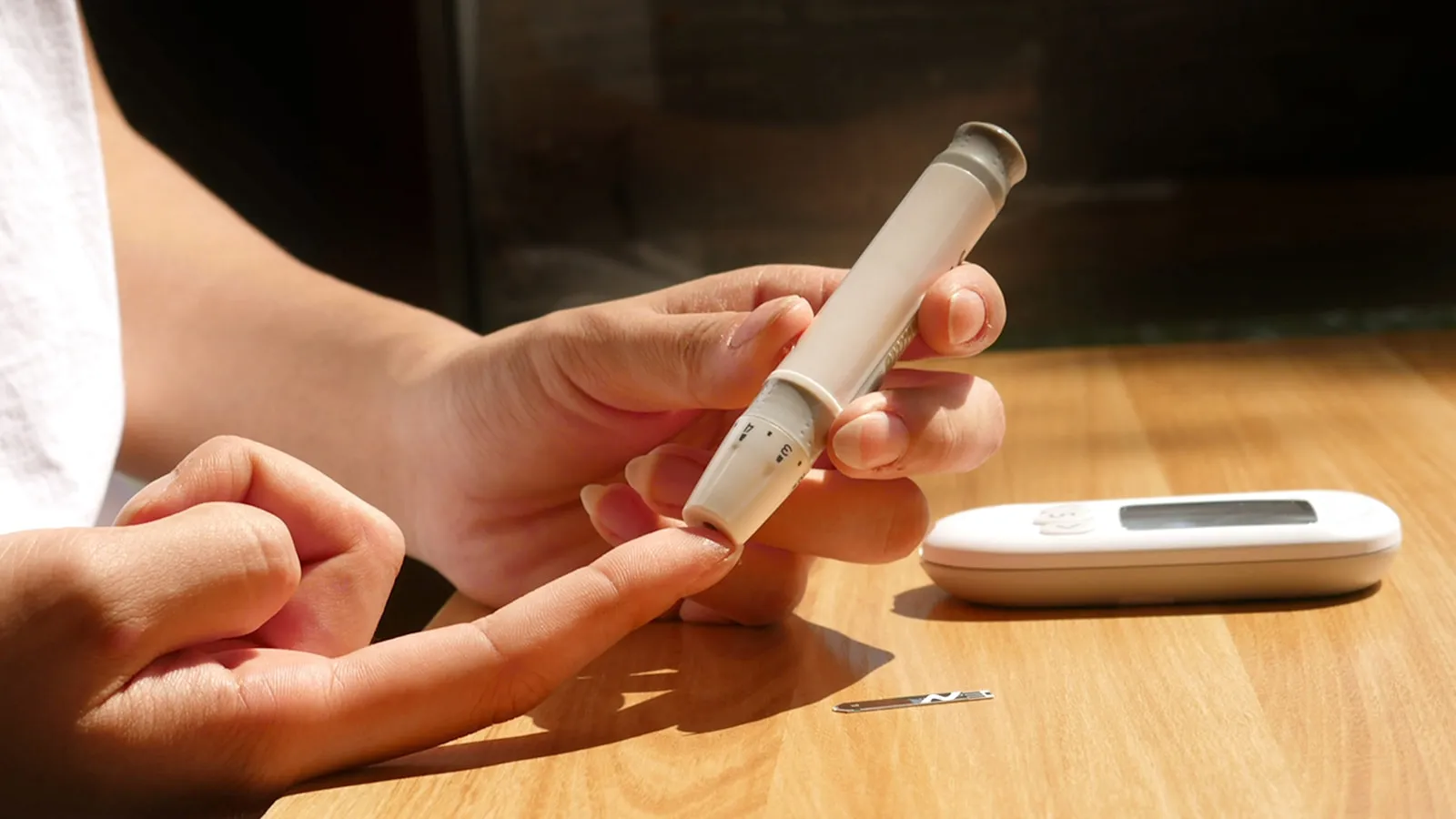
Lipid Screening
HDL, LDL, total cholesterol and triglycerides — your cholesterol often improves a lot while losing weight. This test makes it visible.
According to the NVKC, cholesterol comes partly from food and is partly made by the liver; the body uses it for tissues, organs, certain hormones and bile acids. According to the NVKC, HDL particles carry cholesterol away from the tissues and organs to the liver. The cholesterol/HDL ratio is total cholesterol in proportion to that HDL cholesterol.
According to Thuisarts, high cholesterol can come from, among other things, unhealthy eating, being overweight and moving little, and when it is too high for years the blood vessels can become blocked without high cholesterol itself giving symptoms. The cholesterol/HDL ratio only becomes visible with a blood test.
According to the NVKC, below 3.5 is the best cholesterol/HDL ratio, with 5 as the limit.
Doctor's Assessment Included
The cholesterol/HDL ratio is the ratio between total cholesterol and HDL cholesterol. According to the NVKC, the ratio should be below 5, and below 3.5 is best.
See the value that applies to you:
Choose male or female — this range differs by sex.
Enter your age — this range changes with age.
This range also depends on context such as cycle phase or sample material; the highlighted rows apply to your group.
Reference ranges may vary between laboratories. When you order a test, a BIG-registered doctor assesses your personal results in context. For treatment decisions, discuss your results with your GP.
Check your own valueThe cholesterol/HDL ratio compares total cholesterol with HDL cholesterol, and according to the NVKC the total cholesterol test measures LDL and HDL cholesterol together.
The cholesterol/HDL ratio responds to HDL cholesterol, and according to MedlinePlus, the US National Library of Medicine's health site, losing weight can raise HDL cholesterol, especially with a lot of fat around the waist.
A fasting blood draw is important according to the NVKC for testing all the fats, from which the cholesterol/HDL ratio also follows, while according to the NHG non-HDL cholesterol can also be measured non-fasting.
According to the NVKC, a cholesterol/HDL ratio below 3.5 is the best result. According to Thuisarts, high HDL cholesterol is fine, because it is good for the blood vessels.
A cholesterol/HDL ratio at or above the NVKC limit of 5 can go with low HDL cholesterol, and according to MedlinePlus diabetes can lower HDL cholesterol. Thuisarts names kidney damage and peripheral artery disease among the diseases with a greater risk after years of too-high cholesterol.
Regular exercise
Regular exercise can raise HDL cholesterol and lower LDL cholesterol.
Cholesterol-lowering medicines
Some cholesterol medicines, including certain statins, can raise HDL cholesterol as well as lowering LDL cholesterol.
High total cholesterol
High cholesterol, the number on top of the ratio, can come from unhealthy eating, being overweight, moving little, some diseases such as a slow thyroid, or many people with very high cholesterol in the family.
Smoking
Smoking and second-hand smoke can lower HDL cholesterol, the number the ratio is divided by.
Certain medicines
In some people, beta blockers, anabolic steroids such as testosterone, progestins in some birth control pills and menopausal hormone therapy, and benzodiazepines can lower HDL cholesterol.
Diabetes
Diabetes can lower HDL cholesterol.
Your GP is the place to discuss a cholesterol/HDL ratio that is too high. To raise HDL cholesterol, MedlinePlus advises limiting saturated fat, as in full-fat milk and cheese, fatty meats and foods made with butter, and avoiding trans fats.
According to MedlinePlus, losing weight can raise HDL cholesterol, especially with a lot of fat around the waist, and a higher HDL cholesterol with the same total cholesterol gives a lower cholesterol/HDL ratio. Thuisarts names losing weight if overweight as one of the most important steps with high cholesterol.
This marker is included in the following test panels.
HDL, LDL, total cholesterol and triglycerides — your cholesterol often improves a lot while losing weight. This test makes it visible.
The 3-month safety and progress check clinics do: pancreas, liver, kidneys, salts and your metabolic progress on GLP-1 medication.
The 6-month measurement: everything from the check-in plus insulin, ApoB and your nutrients — especially relevant if you have been eating much less for a while.
Your starting point before the first injection: blood sugar, cholesterol, pancreas, liver, kidneys, thyroid and nutrients in one measurement.
Medical reviewer
Dr. Naimi oversees the medical standards behind our content and assessments.
Medical policyDoctor's Assessment Included
Every result includes a professional assessment from a BIG-registered doctor. For treatment decisions, discuss your results with your GP.
We use cookies to analyze site usage and measure ad effectiveness. Privacy Policy