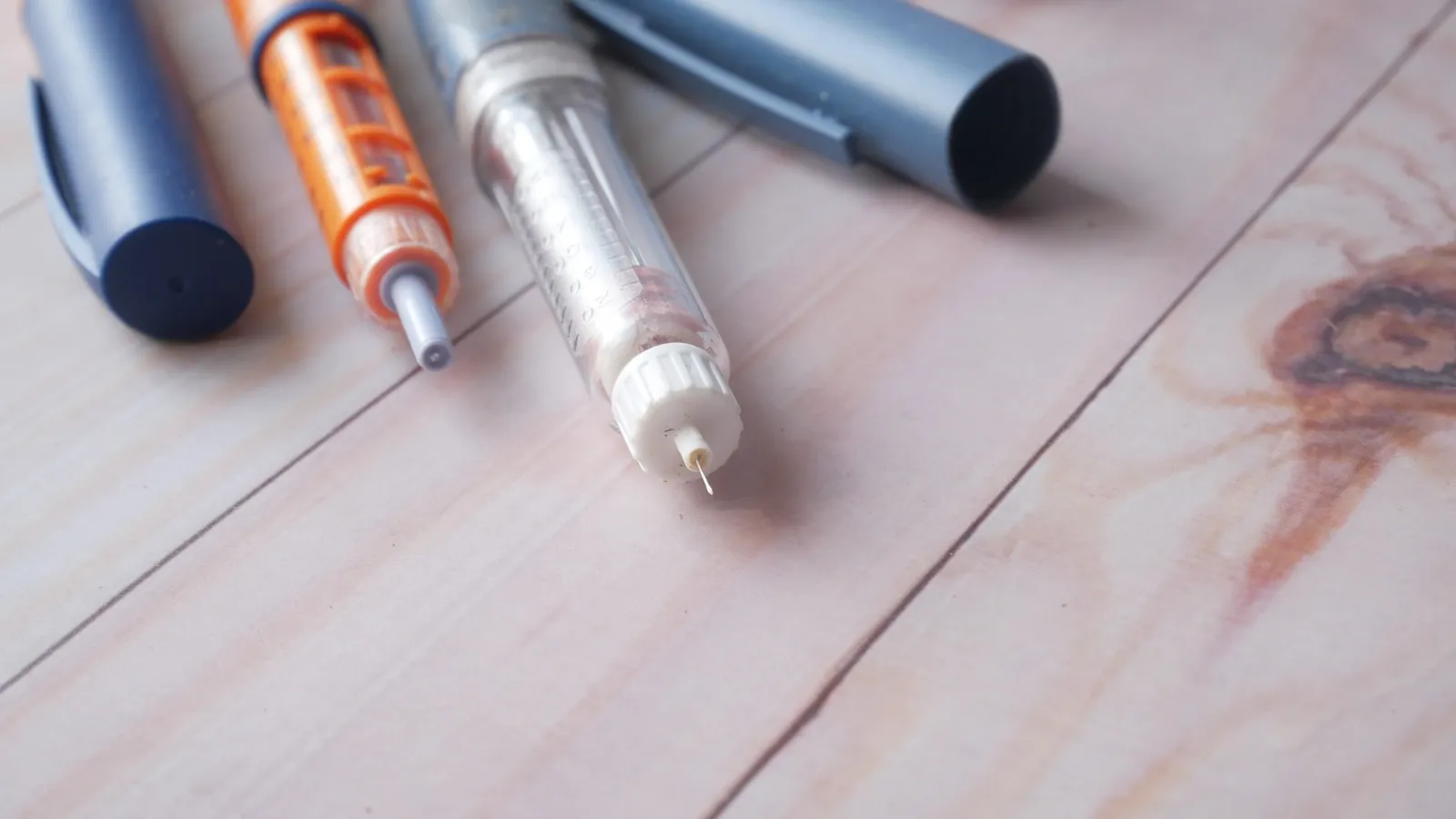
A GLP-1 injection mimics a hormone your own gut releases the moment you eat. That hormone is called glucagon-like peptide 1. It slows how fast your stomach empties and tells your brain sooner that you have had enough.
So the drug does nothing new. It extends something you already do, from a few minutes to a whole week.
That is precisely why values belong with it. If your appetite sits lower for a week at a time, more changes than your weight alone.
In the STEP 1 trial participants lost an average of 14.9% of their body weight over 68 weeks (Wilding et al., 2021).
What is a GLP-1 injection exactly?
It is a weekly or daily injection of a substance that resembles your own GLP-1 but lasts far longer. Semaglutide (Ozempic, Wegovy) and liraglutide (Saxenda) belong to this group. Tirzepatide (Mounjaro) belongs to it partly, because alongside GLP-1 it acts on a second hormone. All three require a prescription.
Your own GLP-1 is broken down within minutes. The mimicked version stays active for days.
The Dutch Farmacotherapeutisch Kompas describes what each drug is registered for and which side effects are known. What a drug does in your case stays a conversation with your doctor.
How does GLP-1 work in your body?
GLP-1 does three things at once. It slows the rate at which your stomach empties, so you stay full longer. It signals the part of your brain that regulates hunger. And it stimulates insulin only when your blood sugar is high, not when it is low.
| Hormone | Where it comes from | What it does | Values that relate to it |
|---|---|---|---|
| GLP-1 | Small intestine, after a meal | Slower stomach emptying, less hunger, insulin when sugar is high | Fasting glucose, fasting insulin, HbA1c |
| GIP | Duodenum, after a meal | Plays a part in insulin and in fat storage | Triglycerides, fasting glucose |
| Insulin | Pancreas | Moves sugar out of your blood into your cells | Fasting insulin, HOMA-IR |
That third point in the first row matters. Because GLP-1 only drives insulin when sugar is high, low blood sugar on these drugs alone is unusual. Combined with certain diabetes medication the picture is different.
Which blood values belong with a GLP-1 injection?
There are three kinds. Effect values show whether your sugar handling is shifting: fasting glucose, fasting insulin and HbA1c. Safety values cover your pancreas and liver: lipase, amylase and ALT. Deficiency values cover what you still take in: ferritin, vitamin B12 and vitamin D.
The effect values move fastest. Fasting insulin can fall within weeks, well before the scale shows much at all.
Take two people 6 weeks in, both 3 kilos down. In one, fasting insulin fell from 18 to 9 mU/l. In the other, from 17 to 16. On the scale those two look identical. In their blood something quite different is happening.
I find that the strongest argument for measuring early. Not because something is wrong, but because otherwise you only learn months later which of the two groups you were in.
The safety values do not move on a schedule. They are there for the moment a complaint appears.
How does a drug that also acts on GIP differ?
Tirzepatide acts on two hormone routes at once, GLP-1 and GIP. The thinking is that the combination reaches further into appetite and into how your body stores fat. In the SURMOUNT-1 trial average weight loss rose to 20.9% at the highest dose over 72 weeks (Jastreboff et al., 2022).
A review in the BMJ sets out the difference between semaglutide and tirzepatide (Lang, 2025).
For the values that changes little. The same three groups stay relevant, they simply tend to move further on a stronger drug.
What does this mean if you are starting soon?
The practical point is that the values above only say something once you know where they came from. A fasting insulin taken today, with no starting value, is a number. That same value beside your starting point is a direction. Your GP can think along about what makes sense to have measured in your situation.
We built the GLP-1 baseline panel around that, assessed by a BIG-registered doctor.
If you want to know which drugs exist, see weight loss medication compared. If you are weighing two options, Ozempic or Mounjaro helps. For the complaints themselves there is an overview in Ozempic side effects.
If you develop severe abdominal pain radiating to your back, contact a doctor the same day. The Dutch site Thuisarts describes per complaint when that is sensible.
References
- Wilding JPH et al. Once-Weekly Semaglutide in Adults with Overweight or Obesity. N Engl J Med. 2021. PMID 33567185
- Jastreboff AM et al. Tirzepatide Once Weekly for the Treatment of Obesity. N Engl J Med. 2022. PMID 35658024
- Lang K. Ozempic v Mounjaro: what is the difference between semaglutide and tirzepatide? BMJ. 2025. PMID 39900371
- Farmacotherapeutisch Kompas, monographs for semaglutide, liraglutide and tirzepatide.
- Thuisarts.nl, guidance on when to contact your GP.
Every blood test result includes a professional assessment from a BIG-registered doctor. For treatment decisions, discuss your results with your GP.
الكاتب
SlimmerLab
Dr. Naimi، طبيب مسجل في سجل BIG الهولندي، يشرف على المعايير الطبية لمحتوانا وتقييماتنا. اقرأ سياستنا الطبية
فحوصات ذات صلة
مقالات ذات صلة

Lowering triglycerides: what works and what your blood shows

Calculating HOMA-IR: what the index says about insulin sensitivity